Sydney Street Files #5: The Man From Canton, and the Importance of Perspective
An excerpt of this blog post was originally posted on the website BOOOOOOOM and can be found here. I wanted to share it here as it definitely qualifies for this blog, and I put in a lot of time writing this before realising there was an 840-character limit.
You can also check out the full gallery for this post on site here - I hope you enjoy the piece!
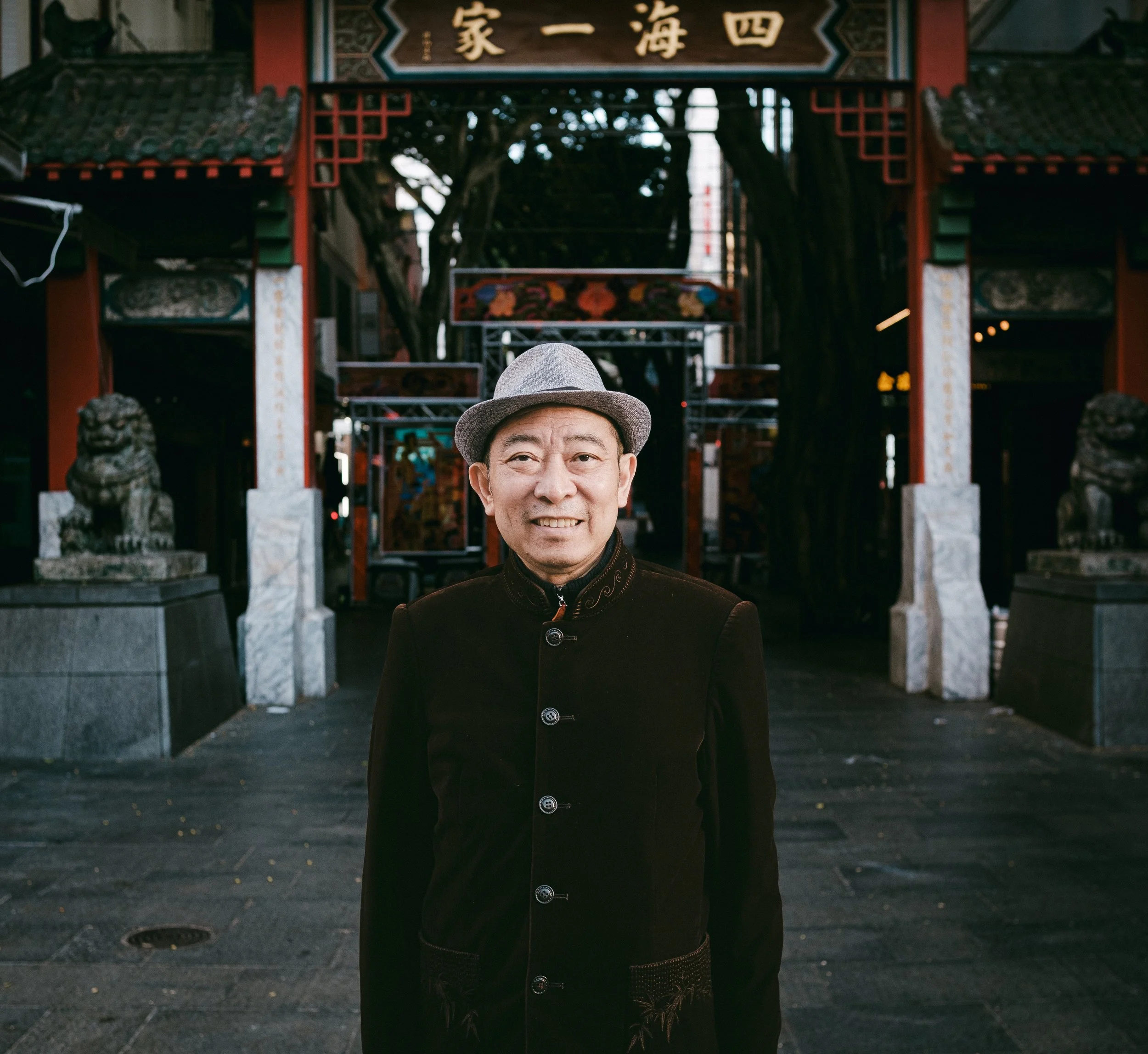
It was around 5 am and I hadn’t slept the whole night. The hypomanic fixation with photography I have experienced over the last few weeks had kept me awake through the night, but I wasn’t even close to being tired. After inhaling some caffeine, I decided to go to a trusty photo location in Sydney - Haymarket. Haymarket is home to Sydney’s largest Chinatown and the biggest demonstration of Chinese cultural influence in Australia since the 1920s.
That is until I was approached by the Man From Canton, asking me to take a photo of him with his iPhone. I happily complied and even asked for a shot with my own camera, he gleefully said yes and I got a few portrait shots in front of the paifang. We exchanged a few words - he told me he was born in Canton in China and had arrived in Sydney 38 years ago. He now lived in Adelaide but was staying at the nearby casino as he planned to visit his 95-year-old mother in Sydney.
As we ordered and waited for our food we got to talking again. He explained how he had travelled to Australia in the 1980s and had worked and owned a store in Ashfield, just around the corner from my house. He went on to describe his busy work schedule and how important the money he made in Australia was to assisting his family back home.
What stood out to me was what he shared with me about Chinatown. There was sadness in his tone as he described the isolation of Chinese Australians in this part of the city when he arrived in Australia, and how they were the victims of constant hate crimes by white Australians.
He explained that Chinese people (who were mostly of Cantonese descent throughout the 1900s) had been forced to divide themselves from white Australia as a matter of protection. There were no English signs and posters surrounding the Chinatown streets, no night markets where people of all walks of life gathered to watch live performances and eat a wide range of culturally diverse foods, and there was definitely no way a white photographer from the suburbs could walk through streets of Haymarket on his camera at 6:30 in the morning.
While I have walked through these streets I have never stopped and asked “how did this area come to be?”. How did the Emperor’s Garden on Dixon Street grow to be so large? Why are these buildings designed the way they are, and why are they all faded? I have so many questions, and as a photographer and historian, I will continue to search for these answers.
I have been trying to learn more about Chinatown from the locals, and while this man wasn’t living in Chinatown at the moment his perspective and insight into the history of Chinatown were surprising, to say the least. This was the first time that I had realised that Chinatown, like anywhere with a rich cultural heritage, has had to go through its own social and cultural development in a predominantly white country that was ultimately against its success. I was completely aware of the racism experienced by so many non-white Australians in other communities of Sydney, yet I was naive to think that Chinatown’s shopkeepers, restaurant owners, and long-time residents have experienced anything but racism while building this beautifully diverse area.
So to the Man From Canton, I say thank you. Thank you for opening up about your experiences, and opening my eyes to something I was too blind to see. As a photographer, I always try to capture the essence of a location, but until I allow myself to understand the area’s origins and history, the photos I have taken in Chinatown will remain soulless.